
The Exploitation of the Mind
Today’s riddle: How is a 5-year-old human like a spotted hyena? (Aside from eating habits and destructive potential!)
Today’s riddle: How is a 5-year-old human like a spotted hyena? (Aside from eating habits and destructive potential!)

Like many dog owners, I’ve gotten spoiled by having a mature, well-trained dog in the house. Naturally, when we first bring home a new member of the family, we are obsessed with teaching all sorts of critical foundation skills (targeting, door and leash manners, handling exercises, and so on). But once those initial behaviors are in place, we give them little thought because we’re too busy focusing on performance behaviors, or working skills, or the next cute pet trick — whatever our particular venue may be.
What this means is that once I’ve taught my dog the way I need her to comport herself in the house, I get lazy. I do things I would never think of doing with a novice dog. And fortunately, our style of training holds up brilliantly in real-life situations — which, as a matter of fact, is why I still have the load of groceries I bought tonight.

I have seen some criticize clicker training as impersonal and artificial — what do you mean, I’m not supposed to talk to my dog? He’s supposed to work for food instead of me? Hands-off? I’m not supposed to touch my own dog?!
Of course this is a skewed view at best, and occasionally outright wrong, but it can be propagated by well-intentioned but confounding directions from some clicker trainers. Let’s clear this up!


(In honor of Talk Like A Pirate Day, today’s post is in that vernacular. Tomorrow will show a translated edition.)
I have seen some criticize clicker trainin’ as impersonal and artificial — what do you mean, I’m not ‘posed t’ talk t’ me dog? He’s s’posed t’ work for food instead o’ me? Hands-off? I’m not s’posed t’ touch me own dog?!
Of course this be a skewed view at best, and occasionally out-starboard wrong, but it can be propagated by well-intentioned but confoundin’ directions from some clicker-ers. Let’s clear the decks!

You’ve tried everything — desensitization, counter-conditioning, safe places, and more — and it’s not enough? Or you know your panicked dog needs relief now while you start other protocols. Here are some more tools to consider.


Before we start with the nuts and bolts of helping pets with storm fear or phobia, we really have to discuss the emotional aspects of fears and phobias. No matter how much has been written or described on this, I still encounter an amazing amount of misinformation which slows or counters owners’ best training efforts.


Remember that fantastically foul candy which made a better punisher than reinforcer? Pretty aversive stuff, would have wrecked a good training plan. But have you seen a highly-desired treat fail to reinforce as well?
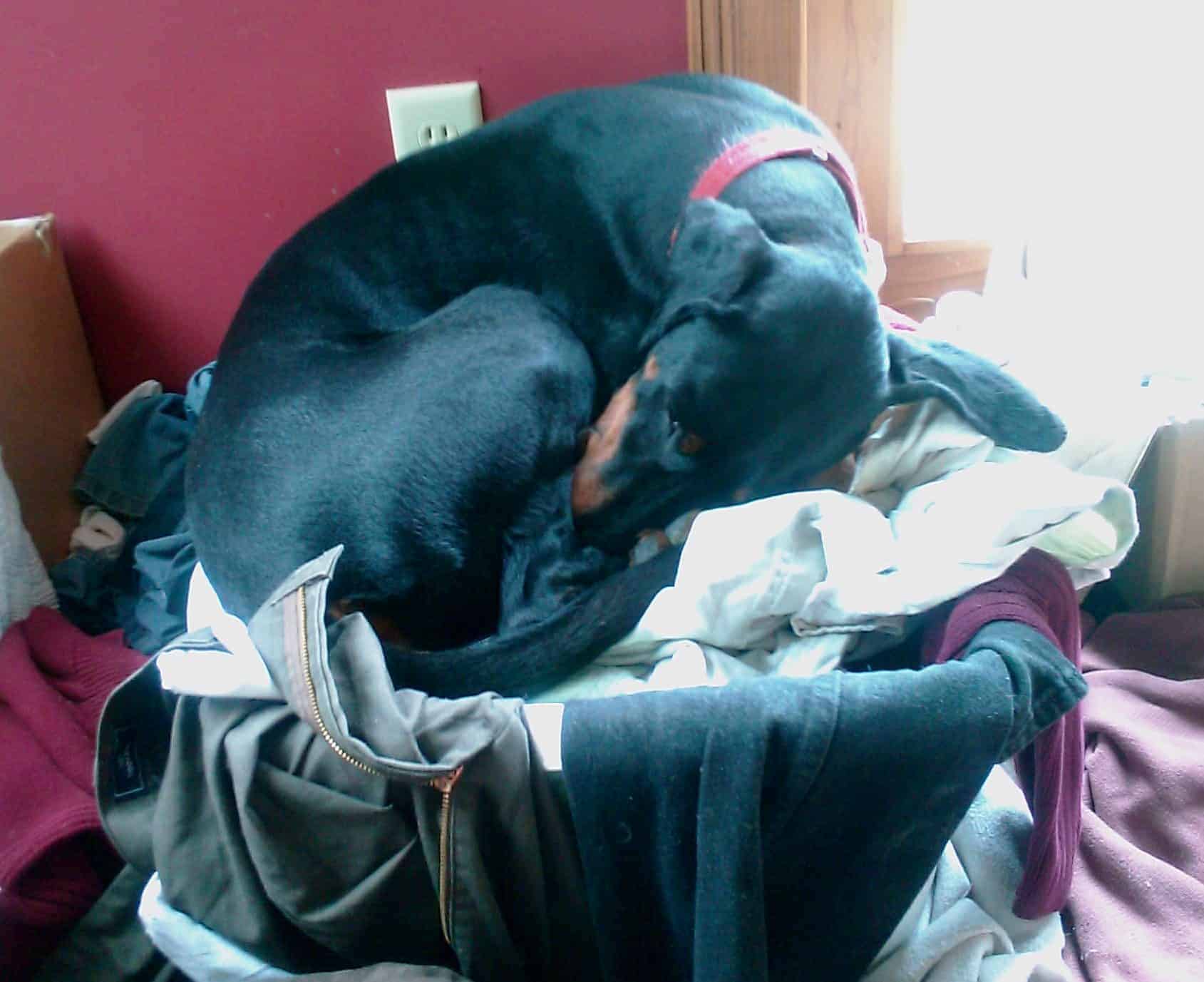
I have a confession to make. Brace yourselves.
I am a professional trainer, and my dogs aren’t perfect.

Part 1 covered Inky’s uncertain backstory and roller coaster of health issues. Today, we’ll talk about how we’ve trained through blindness, and what we’ve learned about obedience, perception, trust, and control.

Where do we draw the line between acceptable variance and dangerous disobedience? Where do we draw the line between an annoyance and real trouble?