Perception and Service Dogs
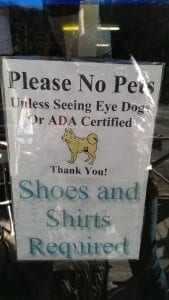
I stopped on my way into the shop to take a photo of the sign on their door. Then I went in, did my shopping, and then gently mentioned during checkout that they might want to revise the wording on their no-pets sign to be more accommodating (and legally acceptable). The shop owners, two women behind the counter, were not aware that their wording was exclusive to many users of service dogs and also not even feasible — there is no such thing as “ADA-certified” — and were eager to learn more. One took notes as I answered questions.
The clerk at a convenience store smiled as Mindy and I approached the counter to pay for my drink. “Your dog is cute, ” she said. “What exactly does she do for you?”
I explained that I was training Mindy, that she didn’t assist me or anyone yet, but that in general it was considered unmannerly to ask a user of a service dog about their medical issues. The young woman hadn’t realized the implication of her question and agreed that it could be invasive.
Most violations of service animal law are not intentional, or even from a position against service animals. Many people use “Seeing Eye dog” as a generic term, without realizing that the Seeing Eye is just one specific organization training dogs for just one specific disability. Saying “Seeing Eye dogs only” is like saying only persons with a specific brand of wheelchair may enter — but their intentions were probably friendly.