Skip to content

Got a minute? Check this out, please.

    Today I’m signal boosting for another post, one which isn’t on this blog because it’s not directly tied to behavior — but it’s important.

    I wrote On Today’s Slavery because most Americans really don’t think of slavery as existing any more. True, sometimes we hear about human trafficking, but it’s usually far away and not really relevant. But truth is, there are more slaves — real slaves — today than at any previous period in world history, and they’re in the US too.

    Cropping, Docking, Political Correctness, Opinions, Animal Welfare, Free Speech, and Dogs

      Dobermann Pinscher from 1915
      Dobermann Pinscher from 1915 (Photo credit: Wikipedia)

      Fair warning: most of my posts I at least try to keep civil and positive. No guarantees today.

      As regular readers will know, I have a breed which is in this country normally cropped and docked. Yes, that’s the actual AKC standard: “ears normally cropped.” There is some debate over whether that line should be interpreted “are usually cropped but not always,” or “are cropped in a normal manner.” And when I say “some debate,” I mean wars have been fought over this ground.

      Social, Civil, and Savvy: Training & Socializing Puppies to Become the Best Possible Dogs

      When You Should NOT Socialize Your Dog — Part 2

        This entry is part 2 of 2 in the series When You Should NOT Socialize

        So all that chat in Part 1 about how to avoid creating problems while socializing a puppy was nice, but you’ve got an adult dog — and whether you made some socialization mistakes or whether you inherited a bad socialization legacy along with the dog, things just aren’t the way they should be. Is there hope?

        Yes, of course there’s hope! But again, here is where mistakes happen in the name of “socialization.” Don’t make them.

        Professional Teamwork – Trainers & Vets Together! And more pet professionals

          Veterinarian
          Veterinarian (Photo credit: Army Medicine)

          There are a lot of professionals who might come into your dog’s life — your veterinarian, certainly, and possibly a trainer, and perhaps a groomer, a pet-sitter, a dog-walker, and others.

          That’s a lot of professional advice which could come your way. And some of it might — in fact, probably will — conflict. How is a pet owner to sort and filter the many pieces of information and misinformation coming her way?

          And, most importantly for us professionals, how do we work together to give our clients the best information and therefore the best combined care?

          (I don’t mean this to be controversial or insulting to any profession or professional — it’s really, honestly about playing to everyone’s individual strengths!)

          The Exploitation of the Mind

            Today’s riddle: How is a 5-year-old human like a spotted hyena? (Aside from eating habits and destructive potential!)

            Storm Watch & Storm Success, Part 2 – Carry-on Allowances & Emotional Baggage

              This entry is part 2 of 7 in the series Storm Watch
              Figure 15 from Charles Darwin's The Expression...
              Figure 15 from Charles Darwin’s The Expression of the Emotions in Man and Animals. Caption reads “FIG. 15.—Cat terrified at a dog. From life, by Mr. Wood.” Author’s signature is at bottom left. See also figures 9-14 and 18 by the same author. (Photo credit: Wikipedia)

              Before we start with the nuts and bolts of helping pets with storm fear or phobia, we really have to discuss the emotional aspects of  fears and phobias. No matter how much has been written or described on this, I still encounter an amazing amount of misinformation which slows or counters owners’ best training efforts.

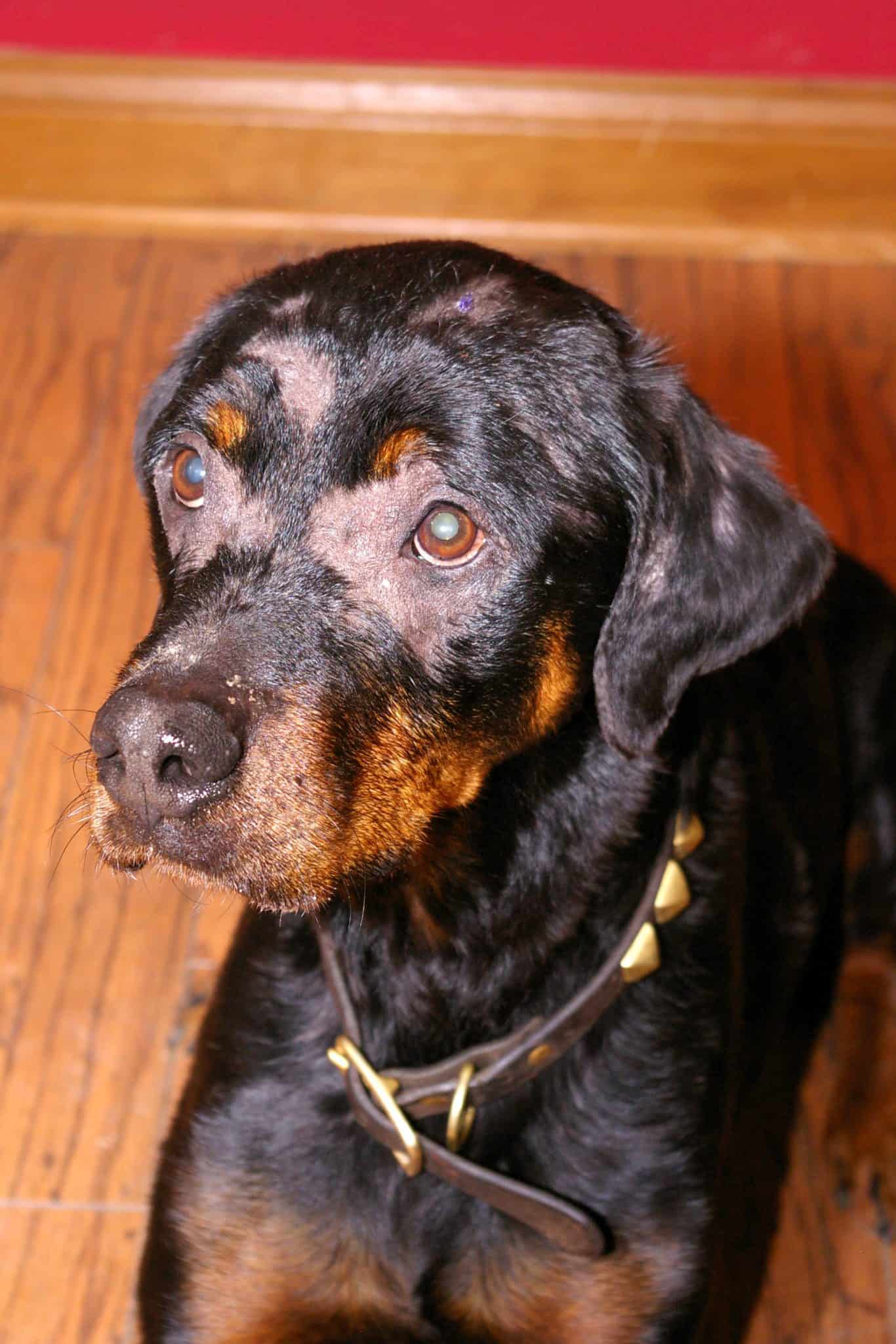
              Inky, in early stages of illness, before much hair loss or blindness

              What A Blind Dog Sees, Part 1

                This entry is part 1 of 2 in the series What A Blind Dog Sees

                Inky, in early stages of illness, before much hair loss or blindness
                Inky, in early stages of illness, before much hair loss or blindness

                Inky, my husband’s dog, is blind.  She wasn’t born this way; in fact, this is a fairly recent development for her, thanks to a very rare and unusual autoimmune disorder.  We noticed her holding her head oddly one night, but thought it was just the light.  By the time we realized she was having trouble seeing, it was progressing very fast.  We estimate she lost most of her vision within two weeks.

                Bitework doesn’t reduce bite inhibition — how annoying!

                  Have you ever tried to train against a taboo?

                  There are some who oppose all forms of trained protection sport and protection work, citing variously that the training is inherently abusive (it’s not), or that the dogs dislike it (obviously untrue!).  Occasionally a protester will suggest that biting a person in a sleeve or suit must of course reduce a dog’s bite inhibition, making it more likely that the dog will mouth or bite a person not in protective gear.

                  I’ve argued logically against this before, but now I have empirical proof — I can’t even pay my dogs to bite!