Online booking is temporarily suspending due to software glitch -- please click CONTACT to book, thanks!
Skip to content
dive bomber pushup

Getting My Butt In Gear And Into Shape — Training Myself

    This entry is part 1 of 2 in the series Behavior Training & Physical Training: OC for Fitness

    One of the toughest things about being a behavior professional is that one doesn’t have many excuses. When I do something stupid, I can easily identify it and the triggers (if any) and a way to avoid it the next time by choosing an alternate behavior instead. That doesn’t mean I will, but it means I can, and then I can feel a bit stupid again for failing to choose the better behavior.

    It also means I know better than to feel bad about a past decision instead of simply focusing on new behavior. But, y’know, the cycle repeats.

    Right now, though, I’m applying my professional knowledge with good results, and I’m blogging here to keep up my motivation and, maybe, help someone else do something similar!

    Valenzia and groceries

    Why We Teach House Manners — Or, Good Training Should Be Idiot-Proof

      Like many dog owners, I’ve gotten spoiled by having a mature, well-trained dog in the house. Naturally, when we first bring home a new member of the family, we are obsessed with teaching all sorts of critical foundation skills (targeting, door and leash manners, handling exercises, and so on). But once those initial behaviors are in place, we give them little thought because we’re too busy focusing on performance behaviors, or working skills, or the next cute pet trick — whatever our particular venue may be.

      What this means is that once I’ve taught my dog the way I need her to comport herself in the house, I get lazy. I do things I would never think of doing with a novice dog. And fortunately, our style of training holds up brilliantly in real-life situations — which, as a matter of fact, is why I still have the load of groceries I bought tonight.

      Actually, I'm not really keen on mental math. That's why I developed ClickStats.

      Interaction During Training

        I have seen some criticize clicker training as impersonal and artificial — what do you mean, I’m not supposed to talk to my dog? He’s supposed to work for food instead of me? Hands-off? I’m not supposed to touch my own dog?!

        Of course this is a skewed view at best, and occasionally outright wrong, but it can be propagated by well-intentioned but confounding directions from some clicker trainers. Let’s clear this up!

        Interaction During Training — Pirate Edition

          International Talk Like a Pirate Day

          (In honor of Talk Like A Pirate Day, today’s post is in that vernacular. Tomorrow will show a translated edition.)

          I have seen some criticize clicker trainin’ as impersonal and artificial — what do you mean, I’m not ‘posed t’ talk t’ me dog? He’s s’posed t’ work for food instead o’ me? Hands-off? I’m not s’posed t’ touch me own dog?!

          Of course this be a skewed view at best, and occasionally out-starboard wrong, but it can be propagated by well-intentioned but confoundin’ directions from some clicker-ers. Let’s clear the decks!

          Don’t Hook Up With Your Mistakes. (No, it’s not a dating post!)

            This is a "thought bubble". It is an...
            (Photo credit: Wikipedia)

            We emphasize focusing on the positive in clicker training — not pointing out  a mistake, but determining a concrete, alternate behavior instead. In dog manners training, this often appears as replacing “don’t jump” with “sit to greet.”

            But really, what’s the harm in pointing out a mistake? Sometimes we have to know what’s wrong so we know to avoid it, right? And surely we humans are smart enough to think through the big picture?

            Eh, not so much.

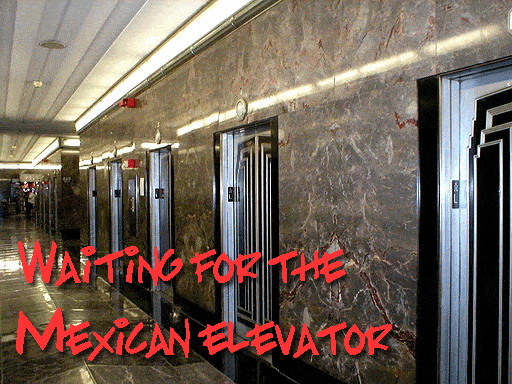
            Waiting for the Mexican Elevator

            Waiting for the Mexican Elevator

              Waiting for the Mexican Elevator
              Actually, these elevators are in the Empire State Building, not Mexico City, but that’s where the CC-licensed photo was taken. Don’t tell.

              As I write this, I am sitting in my hotel in Mexico City, taking a break from teaching clicker training to instructors from all over Mexico and as far as Guatemala and Colombia. It’s been a great time thus far! Saturday Alena and I spoke 8 hours on aggression, and this week we’ve been working on clicker mechanics, foundation work, shaping, etc.

              With students of varying levels of clicker experience, we’ve been pulling a lot of everyday examples of operant and classical conditioning at work. There’s a perfect discussion topic waiting in the form of the elevator in our hotel.

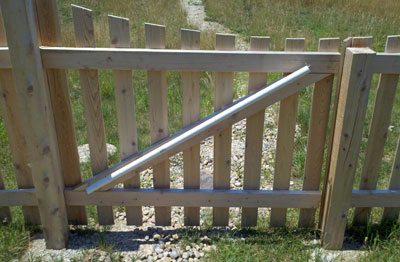
              How to Stop Your Dog Climbing Fences – for $12

                Note, this is more of a fence-climbing solution, rather than fence-jumping. If the dog is pushing or pulling himself over the fence, this will help; if he’s leaping the fence in a single bound like old-school Superman, this is a great solution for a different problem.

                fireworks

                Storm Watch & Storm Success, Part 6 – Phobias & Emergency Management

                  This entry is part 6 of 7 in the series Storm Watch

                  Okay, so you’re well into your new conditioning plan, with graduated protocols in place to reduce your dog’s noise fears or phobias. You’re taking it slowly and making good progress. But suddenly it’s Independence Day or Guy Fawkes, with fireworks going off all around, and a thunderstorm rolling in to boot, and you know you’re not ready for all this. How do you survive tonight?